

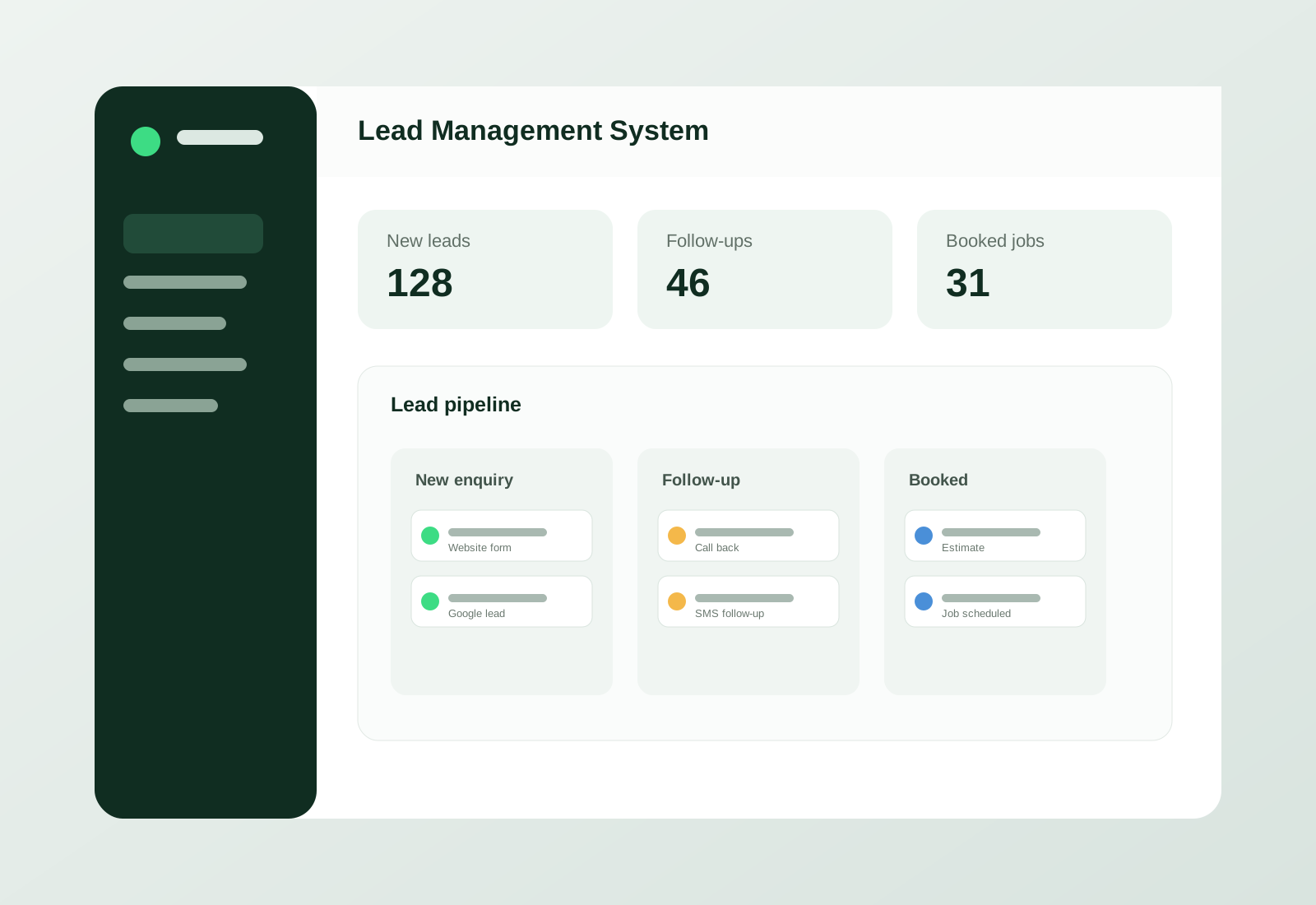
A contractor lead management system gives you one clear process for calls, website enquiries, follow-up, estimates, and customer conversations.
“Lead management system” can sound more complicated than it is.
For a contractor, it simply means having a reliable way to track new enquiries from the moment they contact your business until they either become a customer or decide not to move forward.
Without a system, leads live in call logs, text threads, email inboxes, website notifications, Facebook messages, and somebody’s memory.
With a system, you know who contacted you, what they need, what has happened, and what needs to happen next.
What Counts as a Lead?
A lead is anyone who has shown real interest in your service.
That may include someone who:
- Calls your business
- Submits a website form
- Requests a quote
- Sends a text
- Messages you on Facebook or Instagram
- Uses a website chatbot
- Books an estimate
The problem is that these enquiries rarely arrive through one channel.
That is why local service businesses need a process that brings the important information together.
What Does a Contractor Lead Management System Do?
At a basic level, the system should help with five things.
1. Capture
New enquiries need to enter the system instead of disappearing into separate inboxes.
2. Organize
You should be able to see the customer, service requested, lead source, and current status.
3. Respond
The system should make it easier to reply quickly and manage missed calls.
4. Follow Up
Leads that do not book immediately should have a clear next step.
5. Track
You should know which opportunities became jobs and which did not.
That is the core of contractor lead management.
Is This the Same as a CRM?
Sometimes.
CRM stands for customer relationship management. Many CRM platforms can manage contractor leads, but some are built for large sales teams and come with features a local service business will never use.
The better question is not “Do I have a CRM?”
The better question is “Can my team actually see and manage every lead without confusion?”
If the answer is no, the software is not solving the problem.
Why Spreadsheets Eventually Stop Working
A spreadsheet can be a perfectly reasonable starting point.
The issue is that a spreadsheet does not automatically connect to phone calls, website forms, text messages, or follow-up.
Somebody has to remember to update it.
As lead volume increases, the spreadsheet often becomes incomplete. Then the team stops trusting it.
Once nobody trusts the data, people go back to managing everything from their phones.
That is how the business ends up with several half-systems instead of one working system.
What Should Contractors Look For?
A useful contractor lead management system should be simple enough to use every day.
Look for features such as:
- Centralized lead inbox
- Call and text visibility
- Website form integration
- Simple pipeline stages
- Automated notifications
- Missed-call text back
- Follow-up automation
- Mobile access
- Basic reporting
You may not need every feature on day one. The important thing is that the system supports the way your business actually works.
The Website Should Be Connected
A lead management system should not start after the website.
The website is one of the main entry points.
When someone submits a form, the lead should immediately appear in the same workflow used for other enquiries.
If the website sends an email to one employee and phone calls go somewhere else, the process is still fragmented.
The strongest setup connects the website directly to lead management.
Phone Calls Matter Just as Much
Contractor businesses often get a large percentage of enquiries by phone.
That means the phone system should be part of the lead process.
You should have a plan for:
- Answered calls
- Missed calls
- Voicemails
- Text conversations
- Callbacks
A missed-call text back can help, but it should feed into the same lead view so the conversation does not get lost.
Follow-Up Is Where the System Pays Off
A lead management system is valuable because it shows you the opportunities that need attention.
Without that visibility, businesses often focus on new leads while older quotes quietly go cold.
A simple pipeline makes it easier to see:
- New leads not yet contacted
- Estimates that need scheduling
- Quotes waiting for a decision
- Customers ready for follow-up
That is where organization turns into revenue.
A System Should Reduce Work, Not Add Work
If managing the software becomes another full-time job, something is wrong.
The system should reduce duplicate work, remove unnecessary checking, and make the next action obvious.
For contractors, simple usually wins.
The best lead management system is not the one with the longest feature list. It is the one your business can actually use consistently while the real work is happening.